When Does a Dog Need Medication Instead of a Supplement?
A vet's decision framework for telling when structure/function support is enough and when lab work and a prescription belong in the plan.
Most owners aren't choosing between a supplement and a drug — they're choosing between waiting for bloodwork and guessing without it, and only one of those choices is reversible.

On this page
Is this a supplement problem or a medication problem? That’s the fork every case in this space eventually reaches, and the honest answer depends less on how bad the dog looks and more on whether there’s a measurable axis driving it.
I trace the endocrine axis before I make any recommendation, because a joint chew and a thyroid hormone are not two points on the same spectrum — they’re answers to two different questions. A supplement supports a system that’s already working adequately. A medication replaces, blocks, or corrects a system that has failed a specific, measurable threshold. Conflating the two is where owners lose months, and in endocrine disease, months matter.
In my practice, the case that still sticks with me is a nine-year-old spayed female Beagle, 24 pounds, whose owner had been giving her an over-the-counter joint chew for about four months because she’d “slowed down on the stairs.” What the owner hadn’t clocked — because it came on gradually, over that same stretch — was the dog’s coat thinning along both flanks, a weight gain of roughly six pounds despite no change in food, and a new intolerance for cold mornings on the porch. None of that is a joint story. It’s a thyroid story. Her total T4 came back low, and a follow-up panel with free T4 and TSH confirmed hypothyroidism. The stair reluctance wasn’t cartilage; it was a metabolic slowdown dragging everything with it, including muscle tone and exercise stamina. She started on levothyroxine, and the stair problem resolved as a side effect of fixing the actual axis, not because anyone treated her joints.
Where the fork actually is
The dividing line isn’t “how worried should I be” — it’s whether there’s a diagnosable, quantifiable deficit behind the symptom. National Animal Supplement Council: NASC and FDA guidance are explicit about this distinction on the regulatory side: a product is a supplement, legally, only when it supports normal structure or function without claiming to diagnose, treat, cure, or prevent disease. Per the FDA’s structure/function claims guidance, a company can say a joint product “supports normal joint comfort,” but the moment a symptom traces back to a measurable disease process — an endocrine feedback loop that’s failed, an organ value that’s out of range, a bacterial or parasitic load — the tool that belongs in that slot is a drug, not a nutraceutical, because only a drug is legally permitted to correct that mechanism.
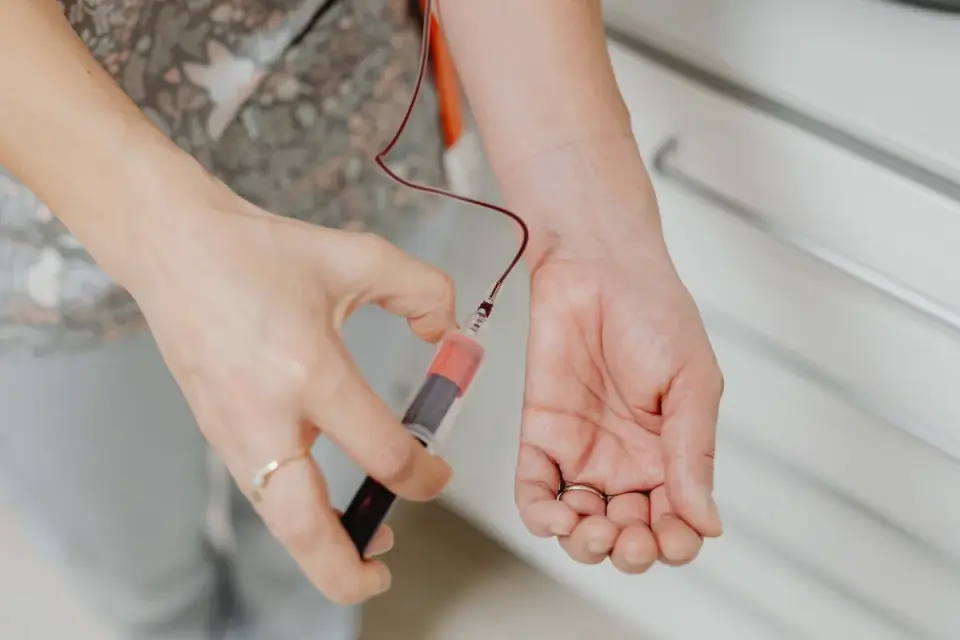
Practically, that means the fork resolves on lab work, not on vibes. A dog that’s stiff after long walks but moves normally the next morning, eats normally, and has unremarkable bloodwork is a reasonable structure/function candidate. A dog that’s stiff and gaining weight, and losing coat, and intolerant of cold, needs a thyroid panel before anyone reaches for glucosamine.
What the joint evidence actually supports — and its limit
Glucosamine and chondroitin sit at the center of the joint category, and the evidence is more mixed than most product pages let on. A review in PubMed on glucosamine and chondroitin use in canine osteoarthritis found the research base “contradictory,” with some trials showing benefit and others not. VCA Animal Hospitals similarly notes that despite the popularity of these nutraceuticals, definitive research support “has yet to be available” — they call it safe and reasonable to try, not proven. Compare that to NSAIDs, which remain, according to that same review base, the most common and best-studied therapy for reducing clinical signs of osteoarthritis. That’s not an argument against joint supplements — it’s an argument for sequencing them correctly. A supplement is a reasonable first move in a dog with mild, intermittent stiffness and no red flags. It is not a substitute for an NSAID, or for imaging, once a dog is reluctant to rise, guarding a limb, or losing muscle mass over a joint.
This is a good place to link the sequencing question directly: if you’re already trying to figure out whether a joint supplement or something else should go first when a dog has more than one issue stacked, our piece on calming supplement vs. joint supplement priority walks through that triage in more depth.
The endocrine cases where a supplement can’t substitute
Hypothyroidism is the clearest example of a hard line. Diagnosis requires a combined panel — total T4 with free T4 and/or TSH — because Cornell University College of Veterinary Medicine: Cornell’s Animal Health Diagnostic Center and the AAHA endocrinopathy guidelines both note that T4 alone can miss or misdiagnose a meaningful share of cases; roughly 20-40% of confirmed hypothyroid dogs have a TSH that falls within the reference range despite a genuine deficit. Once confirmed, synthetic levothyroxine is the standard of care, typically dosed around 0.02 mg/kg twice daily and retitrated against follow-up bloodwork, per Today’s Veterinary Practice. No supplement replaces exogenous thyroid hormone in a gland that’s failed. Any product claiming to “support thyroid function” in a diagnosed hypothyroid dog is, at best, doing nothing to the deficit and, at worst, giving an owner a reason to delay the hormone replacement that actually closes the feedback loop.
Cushing’s disease, diabetes, and Addison’s follow the same pattern — a lab-confirmed hormonal deficit or excess that a structure/function product has no legal or physiological claim to correct. The tell, across all of them, is a measurable axis: a value that’s outside a reference range and a treatment that’s designed to move it back inside that range. If nothing in your dog’s bloodwork is out of range, you’re very likely still in supplement territory.
One short truth worth sitting with: a normal panel is what buys you the right to try a supplement first.
Owners chasing a private-label joint or calming product sometimes don’t realize how thin the manufacturing oversight can be behind the label — that’s worth checking before you spend three months on a product that was never going to move a measurable value anyway; see our guide on spotting a private label supplement brand versus the real manufacturer if the brand’s sourcing is unclear.
A second case, and where the axis pointed
The owners I see most often with this exact confusion are managing an older dog on multiple fronts at once, and it’s worth walking through one in full. A twelve-year-old male Labrador, 82 pounds, came in because his owner had been giving him a calming chew for what she described as new nighttime restlessness — pacing, panting, unable to settle after 9 p.m., going on about six weeks. She’d assumed anxiety. What her exam turned up: increased water intake she hadn’t tracked, a pot-bellied abdominal shape that was new relative to his weight a year earlier, and thinning skin over his flanks. That combination pointed toward Cushing’s disease before we ever discussed sedatives. An ACTH stimulation test confirmed elevated cortisol. The nighttime restlessness wasn’t behavioral; it was polyuria driving him to pace and pant from an endocrine excess, not stress. He needed trilostane, not a calming chew, and the pacing eased once the cortisol axis came down — again, as a downstream effect of correcting the actual mechanism, not from anything aimed at anxiety itself.
If your dog’s symptom picture doesn’t cleanly separate into “behavioral” or “orthopedic,” that ambiguity is itself informative — it’s often the tell that an axis, not a structure, is involved. Where the picky-eating and picking-a-format questions are more mundane and don’t involve a diagnosable axis, our comparison on food toppers vs. chew supplements for picky eaters or the practical liquid tincture vs. chew dosing accuracy breakdown are the right next stop instead.
Where I land
Score it on one rubric: does the symptom trace to a value that bloodwork, imaging, or a physical exam can put a number on? If yes, a supplement is not the tool — it doesn’t have a mechanism to move an out-of-range hormone, and asking it to do that job only burns the window where a drug would have worked cleanly. If no — if the dog is mildly stiff, has occasional loose stool, or seems a little more anxious around thunderstorms but is otherwise normal on exam — a well-sourced supplement supporting normal function is a defensible first step, and the safety margin is generally wide. The mistake isn’t trying a supplement. It’s treating a supplement as a substitute for the bloodwork that would tell you whether you’re actually looking at a supplement problem at all.
For related context, read Calming Supplement vs. Joint Supplement: Which Comes First for an Anxious, Arthritic Dog?.
For related context, read Food Topper vs. Chew Supplement for Picky Dogs: Which One Actually Fixes the Problem?.
Frequently asked questions
Can a supplement ever replace a medication once bloodwork confirms a disease?
No. Once a condition like hypothyroidism, Cushing's, diabetes, or Addison's is confirmed on lab work, the underlying hormonal deficit or excess needs a drug that corrects that specific mechanism. A structure/function supplement isn't formulated or legally permitted to treat a diagnosed disease process.
How do I know if my dog's stiffness needs an NSAID instead of a joint supplement?
Mild, intermittent stiffness with a normal exam is reasonable to try a joint supplement first. If your dog is guarding a limb, reluctant to rise, losing muscle mass, or the stiffness is worsening over weeks, that's a signal to see your vet about imaging and an NSAID rather than waiting on a supplement.
What lab work actually confirms hypothyroidism in dogs?
A combined thyroid panel — total T4 along with free T4 and/or TSH — is the standard, because T4 alone can miss a meaningful share of true cases and isn't reliable enough on its own to confirm or rule out the diagnosis.
Sources
- Historical Summary | NASC LIVE — National Animal Supplement Council
- Small Entity Compliance Guide on Structure/Function Claims — FDA
- Glucosamine and chondroitin use in canines for osteoarthritis: A review — PubMed
- Nutraceuticals for Joint Support in Dogs with Osteoarthritis — VCA Animal Hospitals
- Canine Thyroid Testing — Cornell University College of Veterinary Medicine
- Canine Hypothyroidism Diagnostic Testing and Monitoring — AAHA
- Canine Hypothyroidism: Diagnosis and Treatment — Today's Veterinary Practice