Dog Digestion Timeline: How Food Moves Through
How long dog digestion takes at each stage, what shifts the timeline, and how to judge a probiotic trial fairly.
A dog's meal takes many hours to clear, so gut changes deserve weeks of steady watching.
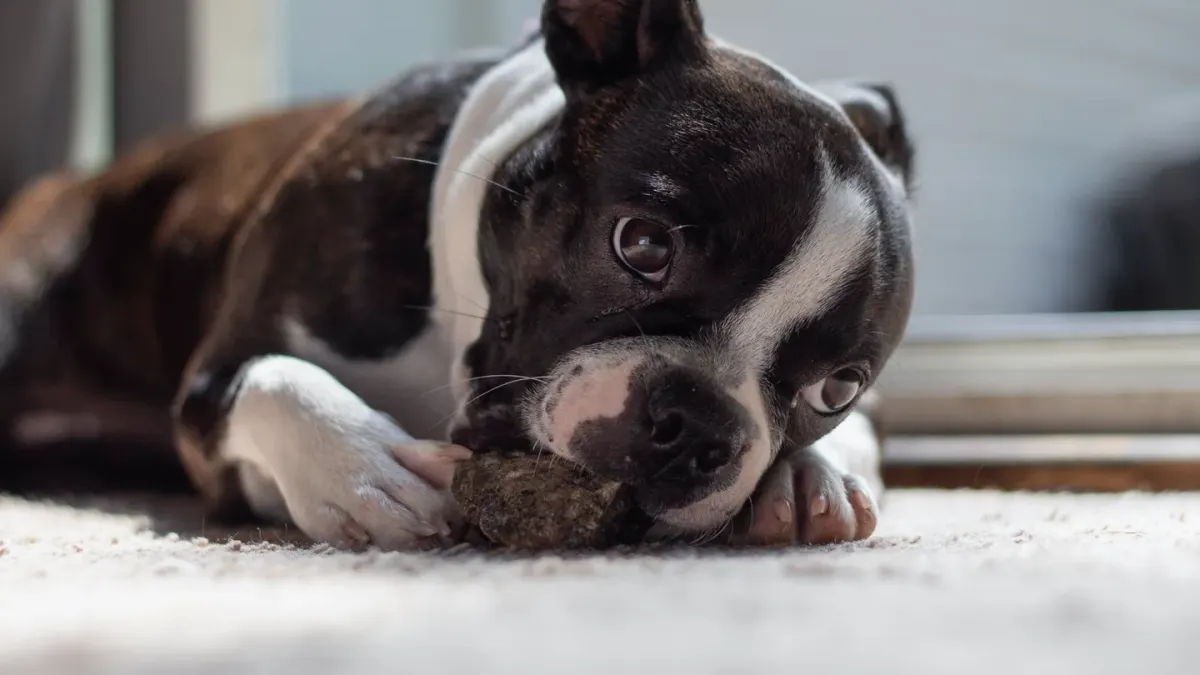
Tom faces a common decision fork with Easton, his 5-year-old neutered Boxer mix in Irvine: change the probiotic after four gassy days, or hold the diet steady and let the dog digestion timeline finish its work. For most healthy dogs, holding steady is the better call.
Use this checklist before you judge any gut product:
- Count in days and weeks, not meals
- Keep food, treats, and timing steady for 4 to 6 weeks
- Track stool shape, gas, appetite, and comfort at the same time daily
- Change one variable at a time
- Call your veterinarian for vomiting, bloody stool, belly pain, or no stool beyond 48 hours
That list matters because digestion is slow, layered work. Food does not pass straight through. It is softened in the stomach, broken down further in the small intestine, then fermented and balanced with water in the large intestine. Merck Veterinary Manual describes how these coordinated stages move food through the canine tract, which helps explain why a single meal can affect stool a day or more later.
Where the hours go in a dog
Gastric emptying takes several hours and varies with meal size, fat, fiber, and moisture. A large, fatty dinner leaves the stomach more slowly than a small, bland breakfast. Liquid and highly digestible food tends to move on sooner.
The small intestine is where most nutrient uptake happens. Pancreatic enzymes and bile meet chyme here, and steady muscular contractions keep it moving. When this phase is rushed by stress, abrupt diet change, or rich table scraps, loose stool may follow.
The colon works on the longest clock. It absorbs water, hosts dense microbial fermentation, and forms stool. VCA Hospitals notes that probiotics are intended to help maintain a balanced intestinal community, a process that depends on repeated daily exposure rather than one dose.
Total transit commonly spans roughly 8 to 36 hours in healthy dogs, with smaller and larger dogs often differing. That range is normal biology, not product failure.
Why a few days cannot judge a probiotic
Janice, who shares an Oakland home with Kira, an 11-year-old spayed Papillon, started a new feeding routine and watched morning gurgling for six days. The stool firmed on day two, loosened on day four, then firmed again. In practice, vets often see this kind of wobble while the colon community adjusts. One good day does not prove success, and one bad day does not prove failure.
A balanced gut microbiome supports overall immune function, and that balance builds through pattern and repetition. Food-first care, steady fiber, fresh water, regular walks, and consistent feeding times may help support normal stool while microbes adapt. Each dog meets that process on its own turf, one at a time, so seniors, anxious dogs, and dogs with sensitive stomachs may settle at different speeds.
Patience is the method here.
How to run a fair trial without fooling yourself
Pick a start date and commit to four to six weeks unless your veterinarian advises otherwise. Feed the same complete diet, measure portions, limit new treats, and keep a short log. Note stool form, frequency, gas, appetite, and energy.
Review background reading on The Complete Guide to Dog Gut Health and Digestion and What Does Healthy Dog Poop Look Like? A Vet’s Read on Shape, Color, and When to Worry so you compare against a steady standard. If gas is the main concern, Dog Gas Remedy: What Actually Reduces Flatulence and Its Smell can help separate diet causes from microbial ones.
Change course if signs worsen, if appetite drops, if weight falls, or if diarrhea lasts beyond a day or two in a small or senior dog. Those patterns point toward examination rather than another supplement week.
Hold the routine steady, watch the whole dog, and let weeks tell the story.
Frequently asked questions
How long does it take a dog to digest food?
Many healthy dogs pass a meal in about 8 to 36 hours, depending on meal size, fat, fiber, moisture, activity, and individual pattern.
Why do probiotics need weeks to judge?
The colon community shifts with repeated daily input, so a few days include normal wobble. Track one steady routine for 4 to 6 weeks.
When should I call the vet instead of waiting?
Call promptly for repeated vomiting, bloody stool, belly pain or bloating, refusal to eat, lethargy, or no stool beyond about 48 hours.
Sources
- Introduction to Digestive Disorders of Dogs — Merck Veterinary Manual
- Probiotics — VCA Hospitals