Chamomile for a Dog Anxious About Moving House: What It Can (and Can't) Do
Moving stress shows up in the body first. A vet explains where chamomile fits for a dog anxious in a new house, what to prioritize instead, and how to build calm around routine and comfort.
A new house unsettles a dog through the legs and spine first, and chamomile only matters once that physical picture is steady.

Moving boxes change how your dog moves. Hallways smell wrong, stairs land differently, the old corner bed is suddenly in a bright new room, and pacing, panting, or refusing to lie down follows.
I start there, not with the herb jar. In my exam room I build the whole-body picture from the musculoskeletal exam: tight shoulders, a tucked lumbar curve, shifting weight at rest. That tension tells me whether a dog is holding stress physically. Chamomile and Valerian Root have been used in traditional herbal care to support relaxation, and I frame a supplement as one part of a structure-and-function plan rather than a fix for moving anxiety on its own.
The family had packed around a five-year-old, 48-pound shepherd mix for two weeks, then moved across town on a Saturday. By day 10 in the new rental she still circled her bed without lying flat, panted at 9 p.m. in a cool room, and startled at the furnace click. The owners were weighing chamomile chews against a prescription sedative and wanted something gentle that would help her settle at night without flattening her daytime personality.
Should chamomile lead the moving plan?
My short answer is no. Use chamomile as a supporting player for rest, not the anchor.
The reason is evidence scope. For the remaining species, evidence is derived mainly from preclinical studies or traditional use, as summarized in a broad MDPI review. That matters for a moving dog, because relocation stress is situational, physical, and behavioral at once. A traditional relaxation herb may help support a calmer evening routine, and helps maintain normal rest when the rest of the plan is solid, but it does not retrain the new-house pattern by itself.
What I would prioritize instead: keep the same bed, same feeding spot relative to you, same walk timing for the first three weeks in. Put traction rugs on slick floors. Give one quiet room with a closed door. Then, if you want an herbal layer, choose a tested calming formula with a clear label over loose tea. For more on forms and safety, see Is Chamomile Tea Safe for Dogs to Drink? and The Best Calming Supplements for Dogs, Scored on Doses and Testing.
When gentle alone backfires
The strongest counterargument to my position is fair: why not try chamomile alone first and avoid stronger ingredients or drugs? Less is often better, especially for mild restlessness.
I respect that instinct, and still land elsewhere for moving stress because the failure mode is delay. I recall a nine-year-old, 22-pound beagle who whined at doorways and licked his front paws raw after a downsizing move. The owners brewed weak tea for fourteen evenings and skipped walks because the neighborhood felt busy. By day 14 his shoulders were ropy, his nails had worn unevenly from shuffling, and his nighttime wake-ups had doubled. Once we restored a predictable walk loop, added a non-slip path to his bed, and used a short-term multimodal calming plan under his veterinarian, he finally stretched out on his side to sleep.
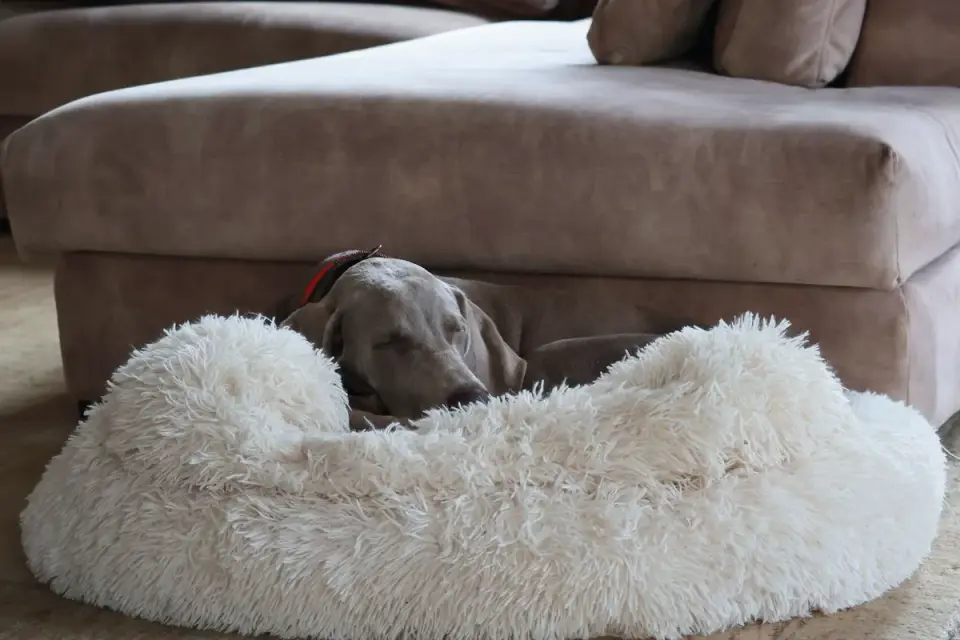
Tea had not harmed him, but it had let physical stiffness and uncertainty run the show.
That is why I score chamomile low as a solo act and higher as part of a routine. Other studied calming ingredients sit in the same supporting role. L-theanine is an amino acid found in tea that has been studied for its calming properties, though most quantitative work remains human — except for one study on psychotic anxiety (SMD = 0.54; 400 mg/day for 8 weeks) noted in Molecular Psychiatry. Similarly, a systematic review analyzed multiple RCTs and concluded that ashwagandha has a moderate positive impact on stress reduction and cognitive performance, according to Cureus. Useful context, not proof your mover will settle.
The new-house edge case owners miss
Pain masquerades as anxiety after a move.
A seven-year-old, 64-pound Lab slipped on new hardwood on moving day, then refused the upstairs bedroom where the family slept. The owners read it as stress about the house and considered more chamomile. On palpation her hamstrings and lumbosacral junction were sore, and she guarded stairs. Once we limited stairs, added joint support and bodywork through her regular clinic, and kept nights downstairs with a familiar blanket for three weeks in, the “anxiety” narrowed to true novelty vigilance that faded with training.
If your dog pants only on stairs, hesitates to jump into the car, or cannot find a lying posture, pause the supplement search and get a musculoskeletal check. Thunderstorm and separation patterns can also overlap with moving stress; Storm Anxiety or Separation Anxiety? How to Tell Which One Your Dog Actually Has and Calming Supplements for Thunderstorm-Anxious Dogs: What the Evidence Actually Shows can help you sort the pattern before you buy anything.
Keep chamomile in perspective. It may help support relaxation inside a steady plan built on movement comfort, predictability, and sleep hygiene. That combination helps maintain normal calm behavior through the transition far better than any single herb alone.
Frequently asked questions
Can chamomile alone calm a dog anxious about moving house?
Usually not. It may help support relaxation as one part of a structure-and-function plan, but routine stability, traction, a quiet resting space, and a check for musculoskeletal soreness matter more during the first few weeks.
How should I use a chamomile product during a move?
Keep dose and timing exactly as labeled, give it with the evening wind-down in the same room and bed each night, and track settling time, panting, and posture for 7–14 days. Ask your veterinarian first, especially if your dog takes sedatives, anti-anxiety drugs, or has liver disease or allergies to ragweed relatives.
When is moving anxiety actually pain?
Suspect pain if settling problems started after a slip, if stairs or jumping got worse in the new place, or if your dog cannot lie flat, shifts weight often, or guards the back or shoulders. Get an in-person exam before changing supplements.
Sources
- A systematic review of chamomile and related herbs for anxiety — MDPI
- Ashwagandha for stress and cognition systematic review — Cureus
- L-theanine and anxiety meta-analysis — Molecular Psychiatry