Can Melatonin Be Given With Trazodone for Dogs? A Vet Explains the Decision
Can dogs take melatonin with trazodone? A TCVM-minded vet explains when the combination makes sense, safety tradeoffs, and what to ask your vet first.
Most dogs do not need both at once, and the dogs who might benefit are the ones whose vet has already mapped the full anxiety picture.

On this page
The phone call usually comes the night before travel, when the trazodone is already on the counter and someone has suggested adding melatonin for extra calm. A 5-year-old, 62-pound Labrador mix is pacing between the suitcases, panting through a Thundershirt, and his owner is weighing whether to layer a sleep-support supplement on top of the prescription for a 6 a.m. flight. It is an understandable impulse, and from both a conventional and whole-patient view it deserves a slower answer than yes or no.
In my exam room I seat meridian logic comfortably beside a conventional workup. Trazodone steadies serotonin signaling for situational fear, while melatonin may help support rest and circadian rhythm, and in TCVM terms we are asking whether Shen is simply disturbed for the night or whether Heart and Liver patterns are unsettled underneath. That distinction decides everything.
The fork: situational need or everyday imbalance?
Start here, because this is where owners get the clearest signal.
If your dog is normally settled at home but falls apart for fireworks, flights, or vet visits, the prescription alone is often enough once timing and behavior setup are right. If the dog cannot settle most evenings, paces, licks, startles easily, or carries tight muscles through the back and hind limbs, adding another sedating layer will not fix the underlying pattern.
Melatonin is not a stronger trazodone. It works on a different clock.
Sedation stacks. Calm does not always stack.
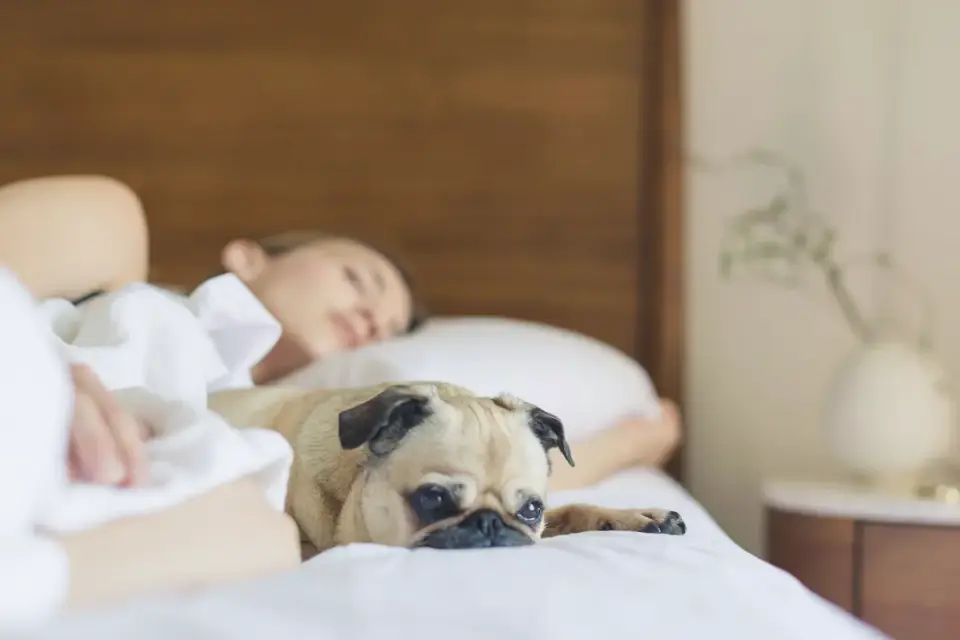
What each one actually does, and where they overlap
Trazodone is a prescription anxiolytic veterinarians use for situational anxiety, often given before a known trigger. It can cause sleepiness, wobbly walking, or quiet withdrawal, especially when combined with other sedating agents. That is the core interaction concern: excessive sedation, not a classic serotonin crisis in most dogs, but your veterinarian still needs the full drug and supplement list.
Melatonin is an endogenous sleep-wake signal, sold as a supplement that may help support relaxation and sleep. Evidence in dogs for anxiety alone is limited. For the remaining species, evidence is derived mainly from preclinical studies or traditional use, as summarized in a broad herbal review published by MDPI. I keep expectations narrow: it may help support a wind-down routine, it does not retrain fear.
Related calming ingredients sit in the same evidence-bounded space. L-theanine is an amino acid found in tea that has been studied for its calming properties, and human data remain dose- and context-specific — except for one study on psychotic anxiety (SMD = 0.54; 400 mg/day for 8 weeks) reported by Molecular Psychiatry. Chamomile and Valerian Root have been used in traditional herbal care to support relaxation. A systematic review analyzed multiple RCTs and concluded that ashwagandha has a moderate positive impact on stress reduction and cognitive performance, according to Cureus. None of those lines proves a melatonin-trazodone synergy in dogs.
For background on what melatonin alone may and may not do, see Melatonin for Dogs: What the Evidence Actually Supports (and Where It Doesn’t).
When layering backfires: the groggy morning after
She had done everything thoughtfully. A 9-year-old, 28-pound beagle mix with separation distress had a trazodone plan for a weekend boarding stay, and three weeks in advance the owner added a nightly melatonin chew plus an extra calming blend on departure day to smooth the transition. By day 2 the report was not calmer behavior but a dog who would not eat breakfast, stumbled on the ramp, then slept until noon and woke still whiny. The sitter, worried, skipped the next trazodone dose entirely, which left the dog under-supported for the actual trigger night. The tradeoff was textbook: too much sedation blunted appetite and mobility without teaching the nervous system anything, and then inconsistent dosing erased the prescription benefit.
That is why I reject do-it-yourself layering for a dog who is already sedated, geriatric, liver-compromised, on MAOIs or other serotonergic drugs, pregnant, or scheduled for anesthesia. Whole-patient logic agrees: heavy dampness and dull Shen are not calm Shen.
If you want a broader rubric for judging calming formulas, The Best Calming Supplements for Dogs, Scored on Doses and Testing and Dog Anxiety Supplements: What Actually Calms a Nervous Dog, and What’s Just Marketing lay out how I score labels and testing.
The edge case that changes the plan: light, age, and liver
An 11-year-old, 44-pound Australian cattle dog mix slept all day and paced all night, and the owner assumed stronger sedation was the answer before a holiday visit. By day 10 on a new evening routine — earlier last walk, dim lamps after 8 p.m., white noise, same bed in the same corner — night pacing dropped from two hours to twenty minutes without changing any prescription. Her senior panel two months earlier had shown early liver changes, which mattered because both trazodone and melatonin move through hepatic pathways and older dogs clear sedatives more slowly.
Light-sensitive, night-restless seniors are the group where circadian support makes the most conceptual sense, and also the group most vulnerable to morning grogginess and drug interactions. Acupuncture-minded clinicians often find concurrent back pain, cognitive change, or nighttime house-soiling underneath that restlessness. In that setting, melatonin is never the first lever; pain control, toileting access, and a conventional workup come first, with any supplement added only with veterinary sign-off and a clear stop date.
How I would decide with your vet
Bring the whole list: trazodone dose and timing, all chews and oils, other prescriptions, age, weight, liver or seizure history, and what calm actually looks like for your dog. Ask whether melatonin adds anything the prescription plus behavior plan does not already cover, what excessive sedation would look like overnight, and when to recheck.
If your vet does approve a trial, keep it clean. One change at a time, same evening routine, same observation window, written notes on settling time, night waking, appetite, and morning steadiness. Stop and call if you see profound lethargy, ataxia, vomiting, or paradoxical agitation.
My evidence-bounded position is conservative on purpose: use trazodone as the anchored, vet-directed tool for predictable triggers, use routine and training as the daily medicine, and reserve melatonin for select vet-supervised cases — typically light-disrupted or night-restless dogs — rather than as a routine booster. The strongest counterargument is that owners want something gentle to add when trazodone alone leaves the dog still trembling, and that concern is valid. I still land here because drowsier is not calmer, and a clear Shen needs both a settled body and a settled pattern behind it.
Frequently asked questions
Can I give melatonin with trazodone before fireworks or travel?
Only with your prescribing veterinarian's direction. The main risk is excessive sedation and wobbliness, and seniors or dogs on other serotonergic or sedating drugs need extra caution. Call your clinic with the full product list before layering.
Does melatonin make trazodone work better for anxiety?
There is no strong canine evidence for synergy. Melatonin may help support rest and routine, while trazodone targets situational anxiety. Behavior setup, timing, and pain or medical rule-outs usually matter more than adding another product.
What should I track if my vet approves trying both?
Settling time, night waking, appetite, morning coordination, and any vomiting, profound lethargy, or agitation. Use one change at a time and a defined recheck date.
Sources
- Broad herbal review including chamomile evidence tiers — MDPI
- Ashwagandha systematic review on stress and cognition — Cureus
- L-theanine meta-analysis in anxiety contexts — Molecular Psychiatry